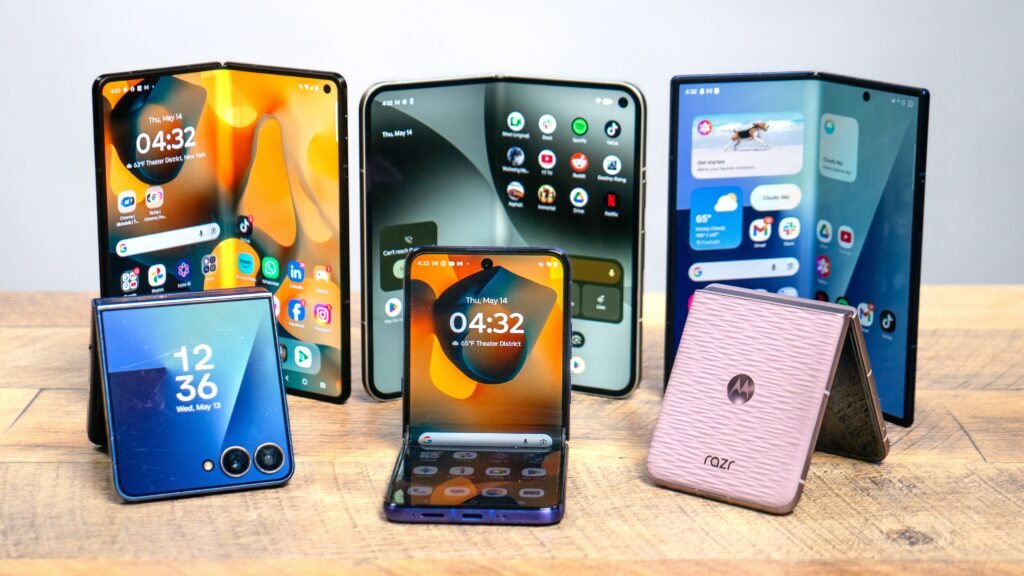

Remember when foldable phones felt like a science experiment you’d be nervous to drop, let alone actually use every day? That era is officially over. Creases that used to catch your fingernail are now barely noticeable. Hinges that once made owners flinch are rated for hundreds of thousands of folds, which works out to years of daily use without a hiccup. And the phones themselves have gotten thin enough that closing one no longer feels like folding a small brick.
2026 might be the year foldables stopped being a novelty and started being a genuinely smart phone choice for a lot of people. The lineup has also gotten more interesting, with flip phones, book-style foldables, and even tri-fold designs all competing for your attention now. Here’s where the category actually stands, and which phone fits which kind of buyer.
Why Foldables Finally Feel Mainstream
A few things changed at once to get the category here. Manufacturers started using titanium frames instead of aluminum, which made phones noticeably sturdier without adding bulk. Hinge engineering matured to the point where most flagship foldables are now rated for 200,000 or more folds, roughly five years of heavy daily use. And ingress protection, the rating that determines how well a phone resists dust and water, finally caught up to traditional flagships on a few key models.
The Two Main Foldable Styles
Before picking a specific phone, it helps to know which shape actually fits your habits.
Book-style foldables open like a small book into a tablet-sized inner display, ideal if you want more screen real estate for reading, multitasking, or content creation. Flip-style foldables fold vertically into a compact square, prioritizing pocketability and style over extra screen space. There’s also a newer third category, tri-fold phones, that fold twice for an even larger unfolded display, though they remain a niche, expensive option for now.
The Best Foldable Phones to Buy Right Now
Samsung Galaxy Z Fold 7 — Best Overall
After a few generations that felt more like incremental tweaks, Samsung genuinely overhauled its book-style foldable this year. The Z Fold 7 is thinner and lighter than any previous model, and it finally brought a 200MP main camera over from the Galaxy S lineup, closing a gap that’s bothered Fold owners for years.
Pros:
- Strongest overall app optimization for the larger inner display
- 200MP main camera puts it on par with Samsung’s flagship phones
- Thin, light build at 8.9mm folded and around 215 grams
Cons:
- Battery life and 25W charging speed trail several competitors
- Starting price around $2,000, climbing toward $2,419 for maximum storage
Real-world use case: A consultant who needs to review documents, jump between spreadsheets, and respond to emails on the go will get genuine productivity value from the larger inner display, especially paired with Samsung’s mature multitasking software.
Google Pixel 10 Pro Fold — Best for Durability and AI Features
Google addressed the last major weakness in its foldable lineup this year by adding full IP68 dust and water resistance alongside a redesigned, gearless hinge rated for roughly a decade of folding.
Pros:
- Full IP68 rating, a first for Google’s foldable line
- Strong computational photography with AI tools like Magic Eraser and Best Take
- Starts at $1,799, a few hundred dollars less than the Z Fold 7
Cons:
- Slightly heavier than the Z Fold 7 at around 9.1 ounces
- Smaller outer display than Samsung’s equivalent
Real-world use case: Someone who’s been burned by a delicate phone before will appreciate the peace of mind that comes with genuine water resistance, especially for everyday use in unpredictable weather.
Samsung Galaxy Z Flip 7 — Best Flip Foldable
Samsung’s flip phone had a few stagnant years, but the Z Flip 7 changes that with a notably larger outer screen, a sleeker build, and a hinge that feels more refined than previous generations.
Pros:
- Wide availability and Samsung’s typically longer software support window
- Genuinely useful 4.1-inch cover screen for quick tasks without opening the phone
- Compact and lightweight compared to most book-style alternatives
Cons:
- Less versatile for productivity than a book-style foldable
- Camera system, while solid, isn’t class-leading
Real-world use case: A commuter who wants a phone that feels novel and compact in a pocket, but still wants the option to unfold into a full-sized display for video calls or navigation, will find the Z Flip 7 hits a comfortable middle ground.
Motorola Razr Ultra 2026 — Best Battery Life
If most foldables have one consistent weakness, it’s battery life. The Razr Ultra 2026 breaks that pattern entirely, posting screen-on times that beat nearly every other foldable on the market.
Pros:
- Class-leading battery life among flip-style foldables
- Improved cameras with genuinely good detail in everyday shots
- Excellent display quality on both the inner and outer screens
Cons:
- Only three years of guaranteed OS updates, shorter than Samsung’s commitment
- Smaller battery in raw capacity than some book-style rivals, but used more efficiently
Real-world use case: A frequent traveler who hates carrying a charger will appreciate squeezing a full day or more out of a single charge, even with heavy screen use.
Motorola Razr (2026) — Best Budget Foldable
Not everyone wants to spend flagship money to try a foldable. The base Razr (2026) comes in at $800, a full $300 less than the Galaxy Z Flip 7, while still offering a strong hinge and useful upgrades over last year’s model.
Pros:
- Most affordable new foldable phone currently available
- Larger battery and faster charging than the previous generation
- IP48 rating offers reasonable everyday water resistance
Cons:
- MediaTek Dimensity chipset can feel underpowered for demanding tasks
- Shorter long-term software support compared to premium flagships
Real-world use case: A first-time foldable buyer who wants to try the format without committing to a $2,000 purchase will find this is a low-risk way to see if the form factor fits their habits.
Quick Comparison Table
| Phone | Style | Starting Price | Standout Strength |
|---|---|---|---|
| Samsung Galaxy Z Fold 7 | Book-style | ~$2,000 | Camera and app optimization |
| Google Pixel 10 Pro Fold | Book-style | $1,799 | Durability and AI features |
| Samsung Galaxy Z Flip 7 | Flip | ~$1,100 | Design and software support |
| Motorola Razr Ultra 2026 | Flip | ~$1,300 | Battery life and charging speed |
| Motorola Razr (2026) | Flip | $800 | Affordability |
Prices fluctuate often with trade-in offers and seasonal sales, so it’s worth comparing current retailer pricing before buying.
Book-Style vs. Flip: Which Should You Choose?
If you spend a lot of time reading, multitasking between apps, or creating content on your phone, a book-style foldable like the Z Fold 7 or Pixel 10 Pro Fold genuinely changes how you use a phone day to day. If portability, style, and a lower price point matter more, a flip foldable gives you most of the novelty and convenience without the bulkier folded profile or the higher price tag.
Frequently Asked Questions
Are foldable phones durable enough for everyday use now? Yes, current-generation foldables from Samsung, Google, and Motorola use hinges rated for 200,000 or more folds, translating to roughly three to five years of heavy daily use without hinge failure.
Do most apps work properly on a foldable’s inner display? For the most part, yes. Major apps, including Google’s suite, Microsoft Office, and most social and streaming apps, scale correctly on larger foldable displays in 2026. Some smaller or niche apps may still display with letterboxing.
Which foldable has the best camera? The Samsung Galaxy Z Fold 7 has the strongest raw camera hardware with its 200MP main sensor, while the Google Pixel 10 Pro Fold often produces more consistently pleasing photos thanks to its computational photography features.
Is a cheaper foldable like the Motorola Razr (2026) worth buying? For someone testing the format for the first time, yes. It offers a real foldable experience with solid hardware at a meaningfully lower price, even if it trails flagship models on raw performance and software longevity.
Will Apple release a foldable iPhone? Apple has not officially confirmed a foldable phone, though persistent industry reporting suggests one may arrive as early as 2026, likely at a premium price point above current Samsung and Google offerings.
Final Thoughts
Foldable phones in 2026 aren’t asking for the compromises they used to. Durability has caught up, software has matured, and there’s finally a foldable that fits almost any budget, from the $800 Motorola Razr up to Samsung and Google’s premium book-style flagships. If you’ve been holding off because of old worries about creases or hinge failure, this is genuinely the best year yet to take a closer look. The real decision now isn’t whether foldables are ready, it’s simply choosing the shape and price point that fits how you actually use your phone.